

(भारत के माननीय उच्चतम न्यायालय के फैसले के बाद अयोध्या का मंदिर-मस्जिद विवाद अब सुलझ गया है,शांत हो गया है। इस विवाद ने देश में लंबे समय तक सांप्रदायिक तनाव को पाला़-पोषा है। बड़ी मात्रा में जन-धन की हानि भी हुई है।
लेकिन अभी भी बहुसंख्यक जनता को मालूम नहीं है कि इस विवाद की जड़ में असली कारण क्या थे ? यह विवाद कब पैदा हुआ, किसने पैदा किया, क्यों पैदा किया और इसके नतीजे कैसे आने वाले थे ?..और वह आए हैं या नहीं ?
इस मुद्दे पर 23 साल पहले ‘तथ्यात्मक और तर्कसंगत’ ढंग से अंग्रेजी में लिखा गया एक लेख हमें मिला है। यहां हम अपने पाठकों के लिए उस लेख का हिंदी अनुवाद प्रकाशित कर रहे हैं-संपादक)
लोकतंत्र बनाम निरंकुश राज्य
लेखक: जावेद अख्तर
मुझे नहीं लगता कि अयोध्या की रामजन्म भूमि अथवा बाबरी मस्जिद कोई समस्या है। बल्कि ये तो समस्या का प्रेत है। आप समस्या का समाधान तो कर सकते हैं, लेकिन प्रेत का कोई समाधान नहीं हुआ करता है।
इस तथ्य से कोई इंकार नहीं कर सकता कि अयोध्या ऐतिहासिक और पौराणिक विश्वास से राम की नगरी है। सही दिमाग का कोई व्यक्ति इस बात से इंकार नहीं करेगा कि अयोध्या में राम मंदिर बनना चाहिए।
विवाद की जड़ अयोध्या नहीं बल्कि जमीन का एक प्लॉट विशेष है। हालांकि प्लॉट विशेष नहीं बल्कि 80 गुणा 40 वर्गफीट मात्र का एक छोटा सा भूखंड है।
सच पूछिए तो वह भूखंड भी नहीं है। यदि ऐसा होता तो प्रस्तावित राममंदिर के लिए उस पवित्र भूखंड को मात्र 30 फीट दूर भी तलाशा जा सकता था और विवाद का निपटारा हो चुका होता।
समस्या ये है कि बाकी दुनिया को तो रामचंद्र जी के जन्म की वास्तविक सहस्राब्दी भी पक्के तौर पर मालूम नहीं है जबकि ‘संघपरिवार’ उनके जन्म स्थान के संक्षिप्त स्थल की भी सौ फीसदी पक्की पहचान मालूम होने का दावा करता है।
फिर भी भारतीय समाज को संक्रमित (रुग्ण) कर रही इस समस्या के समाधान हेतु संघ परिवार 30 फीट तो दूर, तीन इंच खिसकने के लिए भी तैयार नहीं होगा।
दूसरी तरफ मौलवियों और मुसलमानों का ये दावा झूठ के अलावा कुछ नहीं है कि जहाँ एक बार मस्जिद बन जाती है, वहाँ हमेशा मस्जिद ही रहती है।
वे इस तथ्य को झुठला नहीं सकते कि अनेक मुस्लिम मुल्कों में तो सड़कों को चौड़ा करने हेतु भी मस्जिदों को हटाया गया है। इसलिए ये जिद्द करना कि ठीक उसी जगह (स्पॉट) पर मस्जिद का पुनर्निमाण हो एक धार्मिक बात के अलावा कुछ भी हो सकती है।
इससे ये साफ हो जाता है कि दोनों तरफ के दावेदारों की समझ में समस्या के समाधान के मुद्दे का क्या महत्त्व है। जिस क्षण अखबारों में वे खबर छपी कि कांची के शंकराचार्य ने एक ऐसा समाधान प्रस्ताव लेकर मुस्लिम पर्सनल लॉ बोर्ड से संपर्क किया है, जिस पर दोनों समुदायों की रजामंदी हो सकती है, उसी क्षण उर्दू के कुछ अखबारों ने ऐसी बेबुनियाद खबरें छापी कि मुस्लिम पर्सलन लॉ बोर्ड के कुछ सदस्यों को सरकार ने 20 करोड़ रूपया दे दिया है।
दूसरी तरफ विश्व हिंदू परिषद के नेता गिरीराज किशोर ने झट से ये घोषणा कर दी कि शंकराचार्य को अयोध्या मुद्दे में दखल देने का कोई कानूनी आधार (लोकस-स्टैंडी) प्राप्त नहीं है क्योंकि वह शैव हैं (और बाद में विश्व हिंदू परिषद ने शंकराचार्य में फौरन ही पुनः आस्था व्यक्त कर दी। जब उसे मालूम हुआ कि शंकराचार्य का प्रस्तावित समाधान सूत्र वही है जो कि आर.एस.एस. ने चाहा है) समाधान की इच्छा और धार्मिक एकता के लिए इन नेताओं के दावे की हकीकत तो बस इतनी सी है।
अब चूंकि विश्व में कहीं भी इतने बड़े पैमाने पर और लगातार बिना बड़े मकसद या बड़ी योजना के कभी कुछ नहीं हुआ है, तो ये सवाल उठना स्वाभाविक ही है कि फिर दोनों समुदायों के कट्टरपंथी ऐसा क्यों कर रहें हैं?
इस बहस को अलग करके नहीं समझा जा सकता क्योंकि यह तो उस महानाटक का एक अंक है जो इस उपमहाद्वीप में गत 150 वर्षों से खेला जा रहा है। ये महानाटक 1850 में शुरू होता है जब एक तरफ तो राष्ट्रवादी ताकतें जाग रही थीं और ब्रिटिश उपनिवेशवादियों की बढ़ती ताकत का प्रतिरोध करने हेतु संगठित होना शुरू कर चुकी थीं।
दूसरी तरफ अंग्रेज यह जान चुके थे कि भारतीयों में सांप्रदायिक आधार पर प्रतिशोधी दो फाड़ किए बिना उनको नियंत्रित कर पाना बेहद मुश्किल है। (ये महज संयोग नहीं हो सकता कि अयोध्या विवाद का मुद्दा भी पहले पहल 1853 में ही उभर कर आता है) अंग्रेजों लिए 1857 का गदर एक भयानक सच साबित हुआ।
लंदन स्थित भारतीय कार्यालय के पत्राचार संबंधी दस्तावेजों से यह बिल्कुल साफ हो जाता है कि अंग्रेजों ने करिश्माई अंदाज से खूब सोच विचार और तर्कसंगत ढंग से किस प्रकार दो राष्ट्रों के सिद्धान्त को पेश किया।
दूसरा अजीब संयोग 1859 में दिखाई पड़ता है। जब उपनिवेशी शासन द्वारा अयोध्या में बाबरी मस्जिद और रामचबूतरा को अलगाने हेतु एक बाड़ (फैंसिंग) खड़ी करता है और अंदरूनी आंगन मुसलमानों को तथा हिंदुओं को बाहरी आंगन इस्तेमाल करने की अनुमति दी जाती है।
ऐसे सब लोग गद्दार ही कहे जायेंगे जिन्होंने अंग्रेजों के इस मत के प्रचार-प्रसार में सहयोग दिया कि हिंदु और मुसलमान दो अलग राष्ट्र हैं जो कि साथ नहीं रह सकते हैं। और इसमें कोई संदेह नहीं है कि मुस्लिम लीग, हिंदु महासभा और आर.एस.एस. इसी श्रेणी में आते हैं।
कुछ लोग इस बात से आहत और क्रोधित हो सकते हैं कि आर.एस.एस. को उपनिवेशी शासन का सहयोगी एवं गद्दार कहा गया है। लेकिन उनसे मेरा एक सवाल है कि यदि ऐसा नहीं है तो फिर 1925 में अपने जन्म से लेकर 1947 में भारत की आजादी तक आर.एस.एस. ने अंग्रेजी उपनिवेशी राज्य के विरोध में एक भी बयान, एक भी रैली और एक भी गिरफ्तारी क्यों नहीं दी है? मुस्लिम लीग के बारे में भी यही सच है।
इस राष्ट्र को विखंडित करने और पाकिस्तान बनवाने वाले इन संगठनों का एक भी सदस्य, एक दिन के लिए भी, उस वक़्त जेल नहीं गया जब आजादी का आंदोलन पूरी बुलंदी पर था।
आर.एस.एस. और मुस्लिम लीग के राजनैतिक स्टैंड में गजब की समानता दिखाई पड़ती है। मुस्लिम लीग ने अपने समर्थकों को भारत छोड़ों आंदोलन का बहिष्कार करने को कहा था। आर.एस.एस. ने भी बिल्कुल वैसा ही किया। एम.एस. गोलवालकर ने कहा था कि ऐसे आंदोलन अराजकता एवं कानून व्यवस्था की समस्या पैदा करते हैं, इसलिए इनसे बचना और इनकी उपेक्षा कर देनी चाहिए।
मुस्लिम लीग को तो पाकिस्तान देकर पुरस्कृत कर दिया गया था लेकिन द्विराष्ट्र सिद्धान्त के हिंदू प्रस्तावकों को इसलिए वंचित रहना पड़ा क्योंकि आजादी के लड़ाके सच्चे राष्ट्रवादी उनके आड़े आ गए थे।
आइये देखें कि कट्टरपंथी कौन होता है? कट्टरपंथी वो है जो इतिहास का एकांगी दृष्टिकोण, संस्कृति की स्वनिर्मित परिभाषा, धर्म की अपनी व्याख्या, राष्ट्रवाद का भी अपना अलग ब्राँड (मार्का) गढ़ लेता है।
धर्म, संस्कृति और राष्ट्र की रक्षा के इस ढोंग और भड़काऊ नारेबाजी के पीछे दरअसल अन्यायकारी और शोषणवादी व्यवस्था को न्यायोचित ठहराना और उसे कायम रखना ही असली मकसद होता है।
गुजरात को हिंदुत्व की प्रयोगशाला कहा गया है, लेकिन मेरी राय में इसकी सबसे बड़ी प्रयोगशाला तो पाकिस्तान है जिसका निर्माण ठीक उन्हीं सिद्धान्तों पर हुआ था जिन पर संघ परिवार आज देश का पुर्ननिर्माण करना चाहता है। पाकिस्तान में इस्लामिलक कट्टरवाद इसीलिए तो मौजूद है ताकि वह शोषणमूलक अर्थव्यवस्था को ढांपे रखने के लिए आवरण का काम कर सके और संघ परिवार का भी अंतिम स्वप्न ‘एक हिंदू-पकिस्तान’ का निर्माण करना ही है।
पाकिस्तान में सामंती व्यवस्था को टिकाऊ बनाये रखने के लिए ये जरूरी है कि जनता को नागरिक आजादी न दी जाएँ नागरिक हकों को न देने के लिए आपको एक अलोकतांत्रिक व्यवस्था की जरूरत होगी और उस अलोकतांत्रिक व्यवस्था का औचित्य बताने और उसको न्यायोचित ठहराने के लिए आपको धार्मिक तत्ववाद और बहुसंख्यकवाद चाहिए जोकि कुछ-कुछ राष्ट्रवाद की तरह लगता हो। धार्मिक तत्ववाद का ऐसा उपयोग उन मुस्लिम देशों में भी साफ दिखाई पड़ता है, जहां देश की सारी दौलत पर चंदेक लोगों का कब्जा होता है। यद्यपि संभ्रात तबका इन देशों में साधारण जनों को कुछ टुकड़े फेंकता रहा है परंतु नागरिक अधिकार देना गवारा नहीं करता है।
फासीवाद और धार्मिक तत्ववाद में एक विशिषट समानता ये है कि दोनों ही अपने नागरिकों की आजादी और मूल अधिकारों को पूर्णतः हड़पने में यकीन रखते हैं। नाजी जर्मनी और तालीबानी-अफगानिस्तान इसके ज्वलंत प्रमाण हैं। ये बड़ी रोचक बात है कि संघ परिवार बिल्कुल प्रारम्भ से ही नाजी विचारधारा से उत्साहित एवं रोमांचित होता रहा है। यदि संघ परिवार को कभी आधा अवसर भी मिल जाए तो वह स्त्रियों को (तालीबान की तर्ज पर) उनकी औकात में रखना शुरू कर देगा।
ऐसा नहीं है कि प्रत्येक कट्टरपंथी अपने नजरिये को एक राजनीतिक औजार के रूप में ही देखता हो। बल्कि इसके विपरीत तत्ववाद में विश्वास रखने वालों का बहुमत तो निष्ठापूर्वक अपने दृष्टिकोण से प्रतिबद्ध होता है। ये तो प्यादे और फरज़ी ही होते हैं जिनका ब्रेनवाश कर दिया जाता है और उनमें भी जो आर्थिक रूप से कमजोर तबकों से आते हैं उनकों ही बलि का बकरा बनाया जाता है। लेकिन उन लोगों के लिए जो इन अदृश्य डोरियों को खींच रहे होते हैं, तत्ववाद एक राजनीतिक रणनीति ही होता है।
ये सोचना कि लालकृष्ण आडवाणी को राम में श्रद्धा थी, इसलिए उन्होंने रथ यात्रा शुरू की, ठीक ऐसा ही जैसे कोई ये विश्वास करता है कि जिन्ना इस उपमहाद्वीप में इस्लाम को बचाना चाहते थे। जबकि तथ्य ये हैं कि जिन्नाह एक ऐसा क्रूर, शातिर और सत्ता लोलुप राजनेता था जिसमें मुश्किल से ही कोई धार्मिक विश्वास मौजूद हो सकते हैं। बिल्कुल ऐसी ही बात आडवाणी के बाबत कही जा सकती है।
हमें ये नहीं भूलना चाहिए कि जब आडवाणी और उनकी पार्टी ने अयोध्या का बीड़ा उठाया था तो मुस्लिम कट्टरपंथियों से उन्हें अत्यधिक उभार मिला था। हमें मुस्लिम तत्ववादियों का एजेंडा भी जान लेना चाहिए। आज विभाजित भारत में कट्टरपंथी मुस्लिम राजसत्ता पर काबिज होने की आकांक्षा नहीं पाल़ सकता लेकिन उसकी राजनीतिक महत्वाकांक्षा अक्षुण है। वह राज्य के भीतर ही एक राज्य बनाना चाहता है। वह लोकतंत्र और धर्म निरपेक्षता में उसी हद तक रुचि रखता है जहाँ तक कि इसमें उसके तत्ववाद को सहन करने की गुंजाईश बची रहे।
वह सहनशीलता और लोकतंत्र इसलिए चाहता है ताकि उसके स्वार्थों की पूर्ति होती रहे। लेकिन अपने मुस्लिम समाज में वह कोई आज़ादी या लोकतंत्र सहन करने को तैयार नहीं है।
वह देश के सबसे बड़े अल्पसंख्यक मुस्लिम समाज पर ठीक उसी प्रकार पूरी तरह काबिज़ होना चाहता है जिस प्रकार ‘संघ परिवार’ पूरे भारत पर नियंत्रण करना चाहता है।
राज्य सत्ता पर दबाव डालने लायक स्थिति में पहुँचने के लिए मुस्लिम कट्टरपंथी खुद को मुस्लिम समाज का एकमात्र नुमाइंदे के तौर पर दर्शाना चाहते हैं। वह मुसलमानों को सौदेबाज़ी के लिए इस्तेमाल करना चाहता है।
जब भी मैं याद करता हूँ कि शाहबानो के मामले में किस प्रकार मुस्लिम कट्टपंथियों को धर्मनिरपेक्ष भारत को झुकाने की इजाज़त दे दी गई थी, तो मेरा सिर शर्म से झुक जाता है।
जिस प्रकार मुस्लिम कट्टरपंथियों के खिलाफ बोलने वाले को इस्लाम विरोधी करार दिया जाता है, उसी प्रकार संघ परिवार के खिलाफ बोलने वाले को राष्ट्रद्रोही करार दिया जाता है। दोनों के अंदर कोई सुझाव सुनने की सहनशीलता ही नहीं है।
इसलिए सवाल दोनों समुदायों (हिंदू-मुस्लिम) के कट्टरपंथियों में से किसी एक को चुनने का नहीं है क्योंकि वे दोनों तो एक दूसरे की परछाई हैं।
ये चुनाव मंदिर और मस्जिद के बीच भी नहीं होना है। बल्कि हमें लोकतंत्र और निरकुंश राज्य में से एक को चुनना है।
आइये, हम इन सभी कट्टरपंथी संगठनों को असंगत बनाकर साफ शब्दों में यह कह दें कि समस्या अयोध्या नहीं है बल्कि तुम खुद ही एक समस्या हो!
(समाप्त)
(यह लेख जावेद अख़्तर (सुविख्यात लेखक, गीतकार, चिंतक) के मूल अंग्रेजी लेख Beyond Real Estate का हिन्दी अनुवाद है। मूललेख Hindustan Times, New Delhi के Editorial Page पर 15 जुलाई 2003 को छपा था, वहीं से लिया गया है। हम अखबार और लेखक दोनों के आभारी हैं। पुनः प्रकाशन में अनुवाद सहित किसी भी संभावित त्रुटि के लिए हम अग्रिम तौरपर क्षमा प्रार्थी हैं।अंग्रेजी के पाठकों की सुविधा के लिए यहां आगे हमने मूल अंग्रेजी लेख भी दे दिया है।)

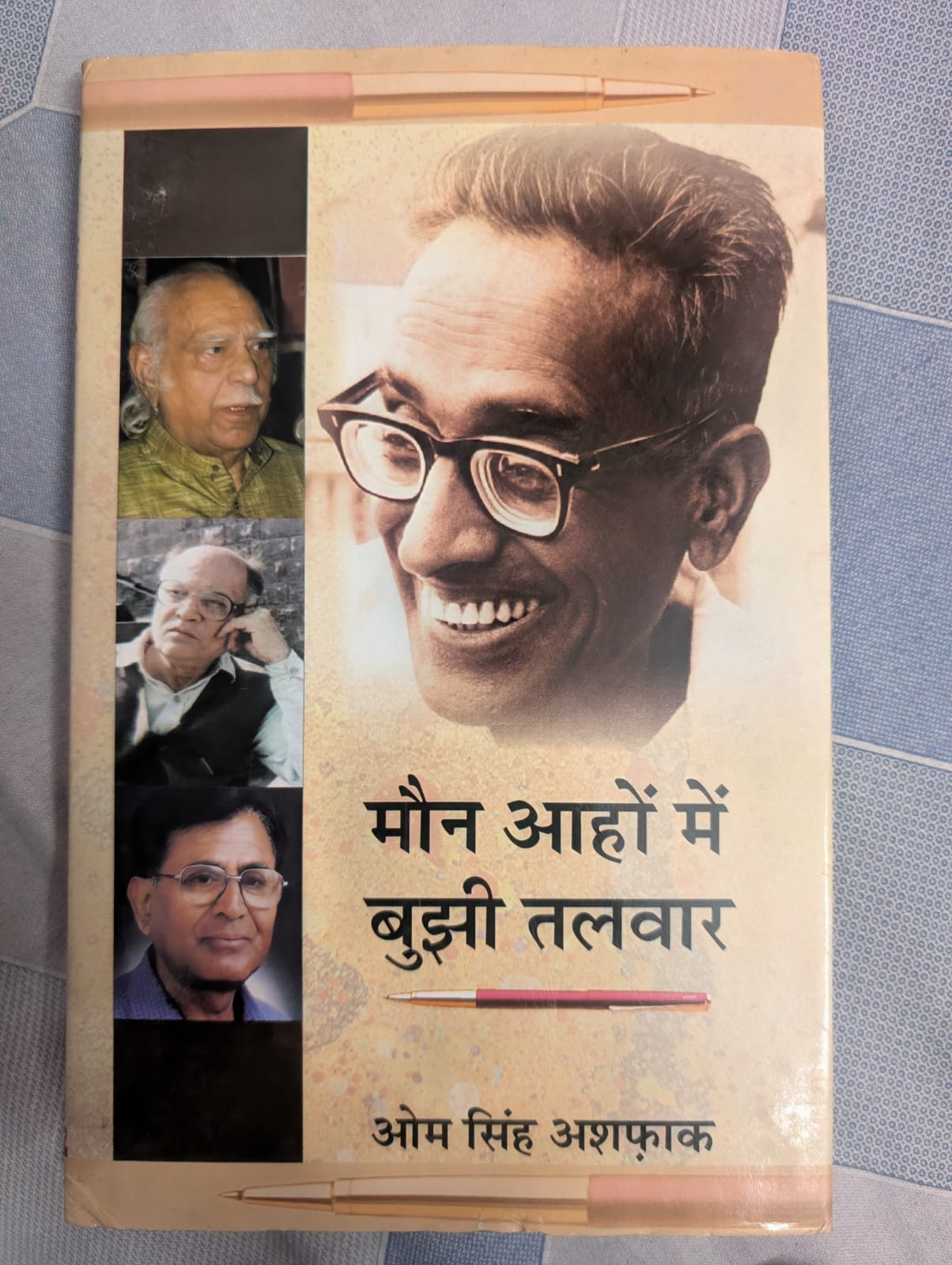
अनुवाद – ओमसिंह अशफ़ाक
***
AYODHYA: The choice isn’t between a temple and a mosque. It’s between democracy and totalitarianism
Beyond real estate
By Javed Akhtar
DON’T think the Ram Janmab bhoomi or the Babri masjid in Ayodhya is a problem. It is a manifestation of a problem. You can solve problems. You cannot solve manifestations.
Nobody can deny that Ayodhya is historically and mythologically Ram’s abode.Nobody in his or her right mind can say that a Ram temple should not be built there. The bone of contention is not Ayudhya, but a particular plot. Not even a par ticular plot but an area of a mere 80/40 square feet Not even that. If the 80/40 square feet ‘Sanctum Sanctorium’ of the proposed Ram tempie could be located a mere 30 feet away.
It is not that every fündamentalist sees his world view as a political instrument. On the contrary the large majority of those who subscribe to such views are sincerely committed to them. But these are mere pawns and minions who have been brain washed. And among them, those from the economically weaker sections are often used as canon fodder. But for those who are pulling the invisible strings, fundamentalism remains but a political strategy. To think it was reverence for Ram that made LK Advani launch his “Rath yatra” is like believing that actually Jinnah wanted to save Islam in the the subcontinent.
The fact is that the dispute could be resolved.The problem is that while no one is sure of the exact millennium of Ram’s birth, the Sangh parivar is absolute by certain about the precise spot of his birth. Yet, leave alone 30 feet, they will not agree to move even by three inches to solve the problem plaguing all of Indian society.
On the other hand, the once a mosque, always a mosque claim of Maulvis Mullahs is nothing but a lie.They cannot deny that in many Muslim countries, mosques have often been shifted even to broaden highways. So the insistence that a mosque must be rebuilt at the exact spot is anything but religious.
That a solution is the last thing on the mind of the contestants either side is obvious. The moment newspapers reported that the Shankaracharya of Kanchi is in touch with the All India Muslim Personal Law Board (AIMPLB) for a mutually acceptable solution, some Urdu papers published unsubstantiated news that some AIMPLB
members had been paid Rs 20 crore by the government. On the other hand,VHP leader Giriraj Kishore wasted no time in declaring that being a
colonialists and had started coming together to resist it. On the other hand, the British realised that they would not be able to control ‘natives’ without creating a schism between them along communal lines.
(I wonder if it is a coincidence that the Ayodhya controversy, too, surfaced for the first time in 1853) For the British, the mutiny of 1857 was their worst fears come true.
From the record of correspondance at the India Office, London, it is clear that the British conjured up, preached and propagated the two nation theory in a deliberate and consistent manner. In 1859, the
colonial administration erected a fence to separate the Babri masjid and “Ram chabutra” in Ayodhya, allowing the inner court to be used by Muslims and the outer court by Hindus Perhaps another coincidence!
All those who helped the British In promoting and propagating the notion that Hindus and Muslims are two separate nations and cannot live together, cannot be called anything but collaborators. And there is no doubt that the Muslim League, the Hindu Mahasabha and the RSS belong to this category. Some people
so they should be avoided and ig nored. The Muslim League was rewarded with Pakistan. But the Hindu proponents of the ‘two-nation theory’ were deprived of their dream because of genuine nationalists who fought for independence.So who is a fundamentalist?
The fundamentalist has his own version of history, his own definition of culture, his own interpretation of religion and his own brand of nationalism.
Behind all the impassioned sloganeering and pretensions of defending culture, religion and nation, the real agenda is to legitimise an unjust and an exploitative system.
Gujarat is called a laboratory of Hindutva, but in my view it’s biggest laboratory is Pakistan, which was founded on those very principies on which the Sangh parivar wants to rebuild this country.
In Pakistan, Islamic fundamentalism is but a con-venient cover for an exploitative economic system. And the parivar’s ultimate fantasy is a ‘Hindu Pakistan’.
In Pakistan, to make a feudal system viable, it is necessary that all civil liberties be denied to the people. To deny civil liberties, you need an undemocratic system. And to justify it Jinnah was a cold-blooded, manipulator hardly had any religious beliefs.
The power-hungry politician, the same can be said of Advani.
What should not be forgotten is that when Advani and his party picked up the Ayodhya gauntlet. Muslim fundamentalists provided a perfect foil to him.
We also need to understand the Muslim fundamentalist agenda. In post-Partition India, the Muslim fundamentalist can no longer aspire to gain control of the State.
But his political ambitions intact, he does seek to be a State within a State. He is interested in democracy and secularism only to the extent that in the name of these principles his fundamentalism is tolerated.
He wants tolerance and democracy because that serves his interest. But he is not prepared to tolerate any freedom or democracy within his own community.
He wants total control over the coun try’s largest minority the same way as the ‘Sangh parivar’ wants total control over the entire country:
To be able to exert pressure on the State, the Muslim fundamentalist would like to be seen as the sole representative of his community.
He Shaivite, the Shankaracharya had no locus standi on the Ayodhya issue. (The VHP regained its reverence for
the Shankaracharya the moment it became known that his proposed formula was no different from what the Sangh parivar wants).
So much for nese leaders desire for a solution and their claims of religious unity!
Since nothing in the world is done on such scale and with such consistency without a grand plan, the question that arises is: why are the fundamentalists from both sides doing this?
This controversy cannot be un derstood in isolation, for it is just a bit act of a marathon drama that is being played in the subcontinent for around 150 yenrs. It all began in the 1850s, when on the one hand the nationalist forces were awakening to the growing power of the British may be shocked and outraged at the RSS being called collaborators of the colonial power.
But I would like to ask why from its birth in 1925 till the country’s Independence in 1947, the RSS did not issue a single statement, did not organise a single rally and did not court a single arrest protesting colonial rule.
The same is true of the Muslim League. Not a single member of these organisations that succeeded in dividing this nation and creating Pakistan, went to jail even for a day at the peak of the freedom movement.
There is an unbelievable similarity in the political stands of the Muslim League and the RSS.
The Muslim League asked its followers to boycott the Quit India movement. The RSS did the same. M.S. Gol walkar said such movements create chaos and law and order problems.
To Justify and legitimise an undemocratic system, you need religious funda mentalism and majoritarianism pretending to be nationalism.
This use of fundamentalism is also evident in those muslim countries where a few control all national wealth.Though the elite dole out crumbs to the ordinary citizen in these countries, no civil rights exist.
Fascism and fundamentalism (theocracy) have one thing in comman: both believe in the total usurpation of the basic rights and civil liberties of citizens.
Nazi Germany and Taliban Afghanistan are eloquent testimonies of this.
Interestingly, the Sangh parivar has from the very beginning been enamoured by Nazi ideology. Given half a chance, like the Taliban the Sangh parivar will start putting women in their place.
This wants to use Muslims as bargaining chips. I hang my head in shame every time I recall how at the time of Shah Bano. Muslim fundamentalists were allowed to force secular India to bend to their diktats.
He who speaks out against the Muslim fundamentalist is anti-Is lam, he who speaks against the Sangh parivar is anti-national. Both of them have no tolerance for any opinion other than their own.
So, the choice is not between fundamentalists of two communities. for they are the mirror-images of each other:
The choice is not even be tween a temple and a mosque. The choice is between democracy and a totalitarian regime. Let us make all fundamentalist organisations irrelevant by telling them in no uncertain terms that it is not Ayodhya they are the problem.
**
(An Article by Javed Akhtar, Published at editorial page in
Hindustan Times,New Delhi, on 15July 2003. We regret in advance for error/mistake in the text or in translation occurred in the process of re-publishing, if any.)

अनुवादक के व्हाट्सएप पर वरिष्ठ कवि एवं लेखक-प्रोफेसर डॉ. बृजेश कृष्ण की यह टिप्पणी प्राप्त हुई है:
“लोकतंत्र बनाम निरंकुश राज्य नामक लेख (लेखक: जावेद अख्तर) बहुत सार्थक विश्लेषण प्रस्तुत करता है॥”
-डॉ बृजेश कृष्ण ‘कठिल’
प्रोफेसर (सेवानिवृत्त)
प्राचीन इतिहास विभाग,
कुरुक्षेत्र विश्वविद्यालय, कुरुक्षेत्र,भारत।